As a parent, it’s natural to want the best possible health for your child, and good dental hygiene plays an important role as they grow. We also understand that caring for children’s teeth can sometimes feel challenging, with lots of mixed messages about what’s best. We’re here to help with practical guidance to help you support your child in developing healthy dental hygiene habits from an early age.
Babies and toddlers (up to three years old)
Sit them on your knee and rest their head on your chest whilst you brush their teeth. Use a tiny smear of toothpaste, brushing their teeth in a gentle and circular motion, covering teeth and gums (there’s no need for your baby to rinse their mouth out).

Babies and toddlers (up to three years old)
Sit them on your knee and rest their head on your chest whilst you brush their teeth. Use a tiny smear of toothpaste, brushing their teeth in a gentle and circular motion, covering teeth and gums (there’s no need for your baby to rinse their mouth out).
Children (aged three and above)
Stand behind them and rest their head against you whilst you brush their teeth. Use a pea-sized amount of toothpaste, brushing their teeth in a gentle and circular motion, covering teeth and gums (encourage them to spit afterwards, not rinse). Carry on helping your child until you are sure they can do it well enough themselves (this is usually when they have the dexterity to tie their own shoelaces).

Children (aged three and above)
Stand behind them and rest their head against you whilst you brush their teeth. Use a pea-sized amount of toothpaste, brushing their teeth in a gentle and circular motion, covering teeth and gums (encourage them to spit afterwards, not rinse). Carry on helping your child until you are sure they can do it well enough themselves (this is usually when they have the dexterity to tie their own shoelaces).
Frequently asked questions
Sugar and toothache
Sugar is the primary cause of tooth decay in children. Here are some of the ways you can help to cut down your child’s sugar intake to avoid tooth decay:
- Avoid sugar-sweetened drinks and fruit juice – water or milk is preferred (fruit juices aimed at children often have more sugar than fizzy drinks)
- If giving juice – use a cup (avoid bottles) and try to stick to mealtimes
- Stick to water or milk at bedtime, and make brushing your child’s teeth the last thing to do before bed
- Try to avoid fruit or sweets as snacks – raisins are especially popular for older children, but less popular for teeth
- Foods such as rice cakes or cheese are more tooth-friendly
- Try offering stickers or crayons as treats, rather than sweets

Sugar and toothache
Sugar is the primary cause of tooth decay in children. Here are some of the ways you can help to cut down your child’s sugar intake to avoid tooth decay:
- Avoid sugar-sweetened drinks and fruit juice – water or milk is preferred (fruit juices aimed at children often have more sugar than fizzy drinks)
- If giving juice – use a cup (avoid bottles) and try to stick to mealtimes
- Stick to water or milk at bedtime, and make brushing your child’s teeth the last thing to do before bed
- Try to avoid fruit or sweets as snacks – raisins are especially popular for older children, but less popular for teeth
- Foods such as rice cakes or cheese are more tooth-friendly
- Try offering stickers or crayons as treats, rather than sweets
Teething is another problem
It starts at around six months, and it can continue when adult teeth start to appear. If your child needs pain relief, make sure you choose a sugar-free medicine. If the pain continues, then contact your dental team for an appointment. Remember to check with your doctor or pharmacist that you are being prescribed sugar-free medicines at all times.

Teething is another problem
It starts at around six months, and it can continue when adult teeth start to appear. If your child needs pain relief, make sure you choose a sugar-free medicine. If the pain continues, then contact your dental team for an appointment. Remember to check with your doctor or pharmacist that you are being prescribed sugar-free medicines at all times.
Get dentist-confident
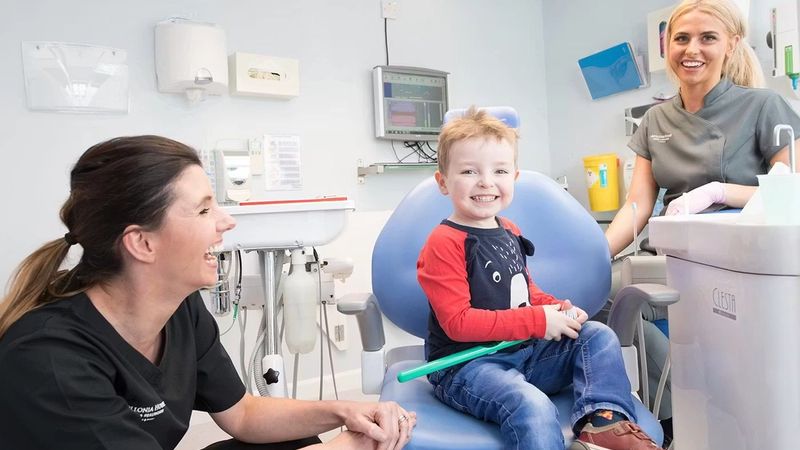
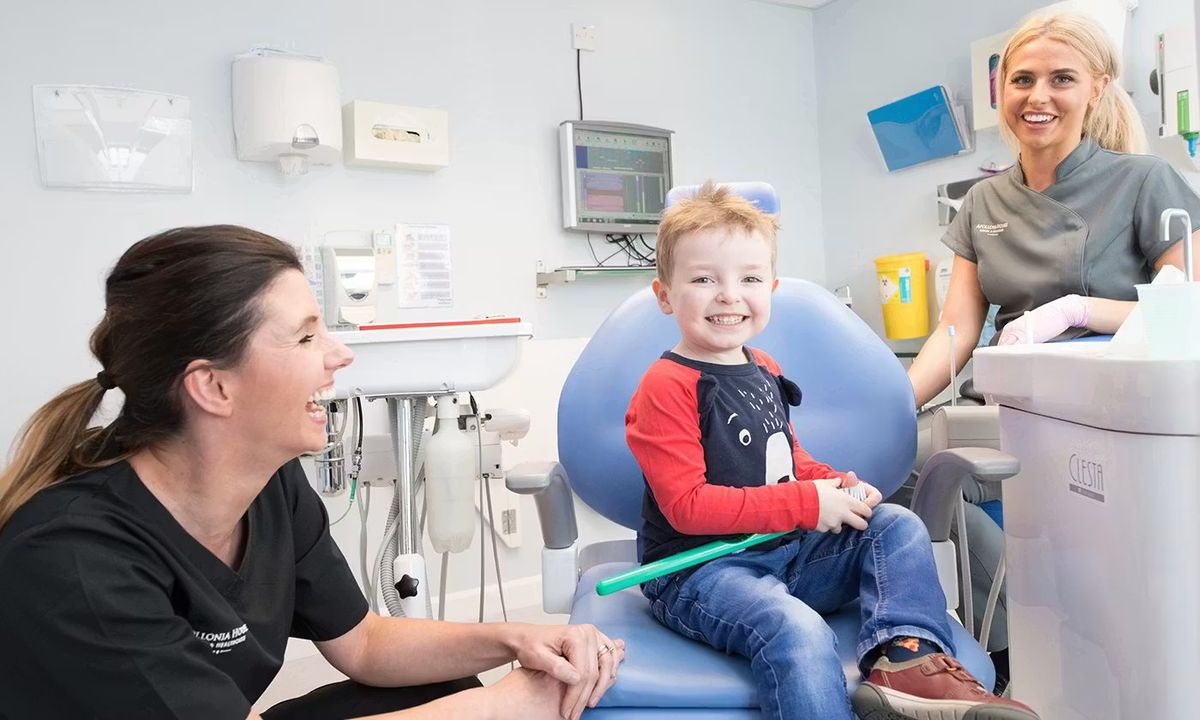
How often do you hear of people scared to visit their dentist? Often, it’s the unknown and lack of familiarity that nurtures fears and anxieties. Regular visits to the dentist for dental health check-ups from an early age will help children to understand the processes and what to expect, as well as build a relationship with their dentist that will last into adult life.

Get dentist-confident
How often do you hear of people scared to visit their dentist? Often, it’s the unknown and lack of familiarity that nurtures fears and anxieties. Regular visits to the dentist for dental health check-ups from an early age will help children to understand the processes and what to expect, as well as build a relationship with their dentist that will last into adult life.
Prevention is always better than cure
Regular dental health check-ups for your child are invaluable for preventing tooth decay and gum disease and maintaining a happy and healthy smile into adulthood.
When should I take my child to the dentist?
We are passionate about protecting young smiles from their very first tooth. Your child will usually start to get their milk teeth at around six months old. We recommend that you schedule your child’s first dental examination as soon as they get their first tooth. Following this, we recommend scheduling appointments between every three and twelve months. This will also let them get used to the noises, smells and surroundings, and prepare them for future visits. The earlier these visits start, the more relaxed the children will be.
Plaque can start to form on young teeth as soon as they emerge, and it’s important to implement a good oral health routine early, starting with that first tooth.

Prevention is always better than cure
Regular dental health check-ups for your child are invaluable for preventing tooth decay and gum disease and maintaining a happy and healthy smile into adulthood.
When should I take my child to the dentist?
We are passionate about protecting young smiles from their very first tooth. Your child will usually start to get their milk teeth at around six months old. We recommend that you schedule your child’s first dental examination as soon as they get their first tooth. Following this, we recommend scheduling appointments between every three and twelve months. This will also let them get used to the noises, smells and surroundings, and prepare them for future visits. The earlier these visits start, the more relaxed the children will be.
Plaque can start to form on young teeth as soon as they emerge, and it’s important to implement a good oral health routine early, starting with that first tooth.